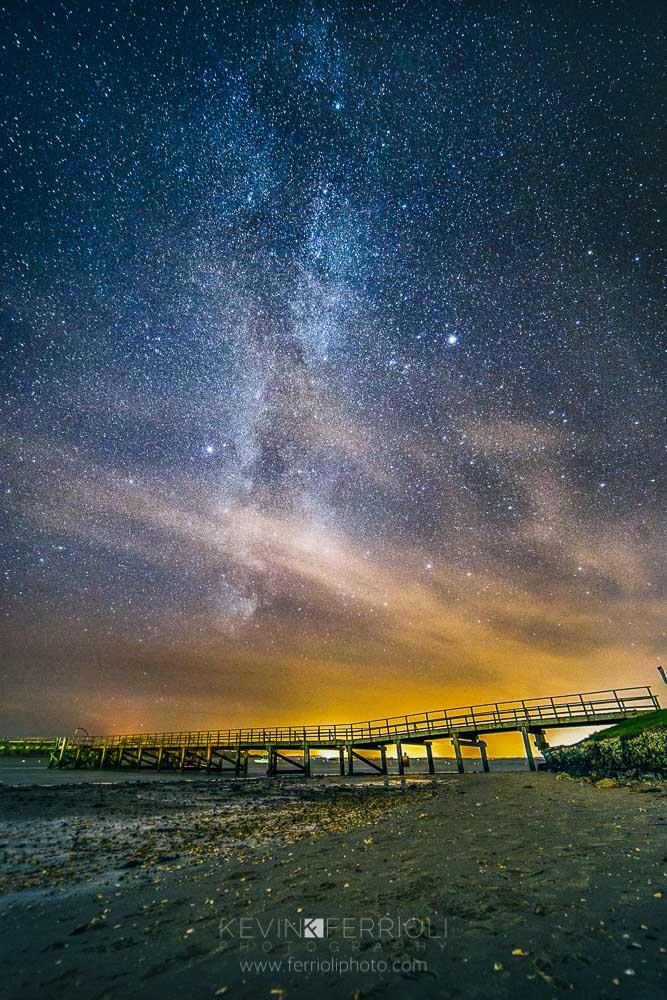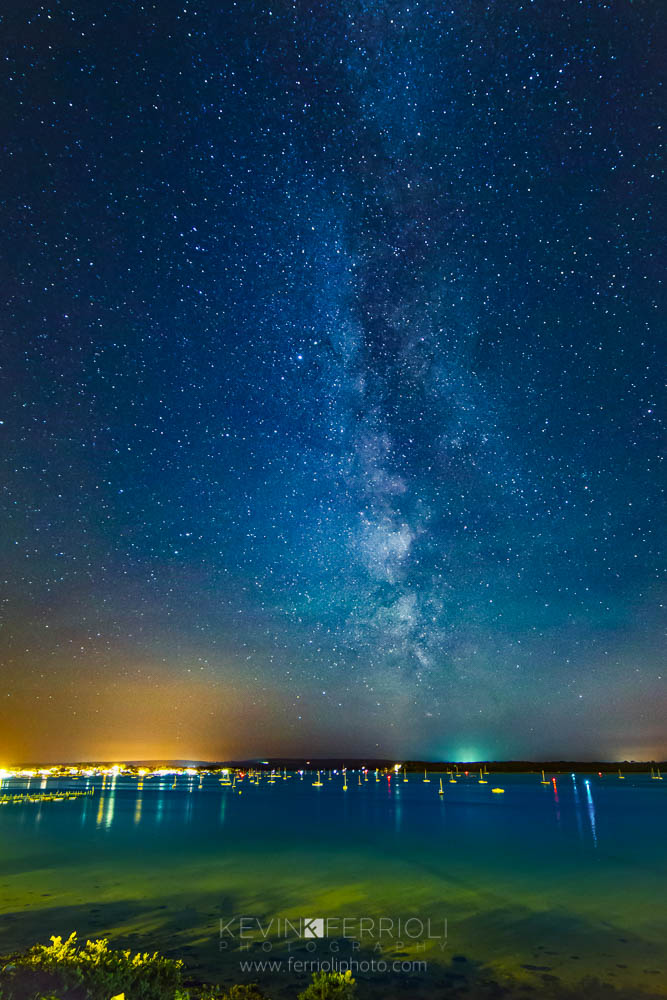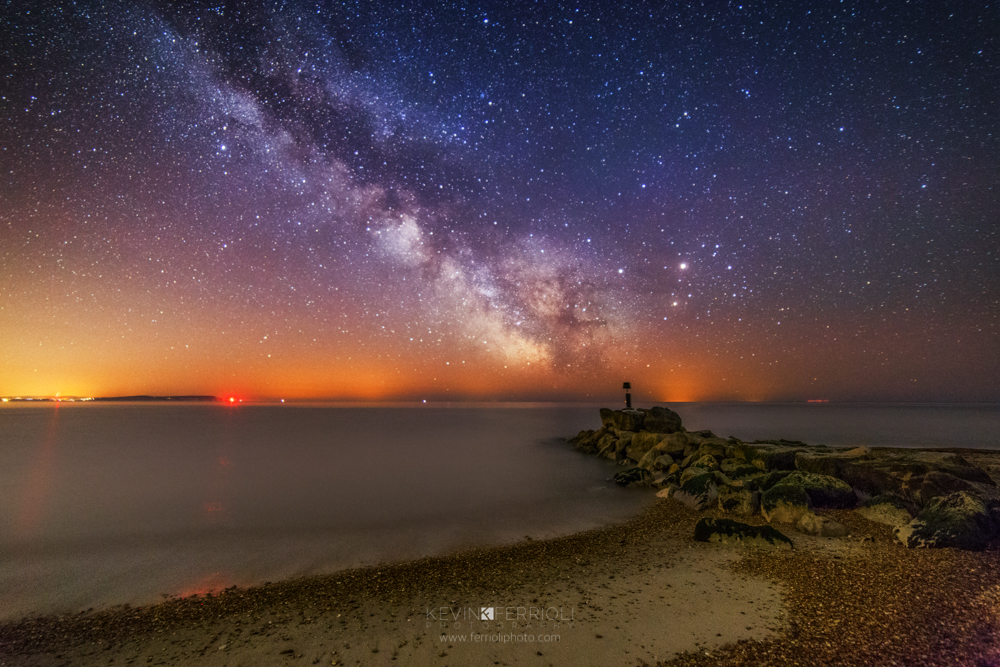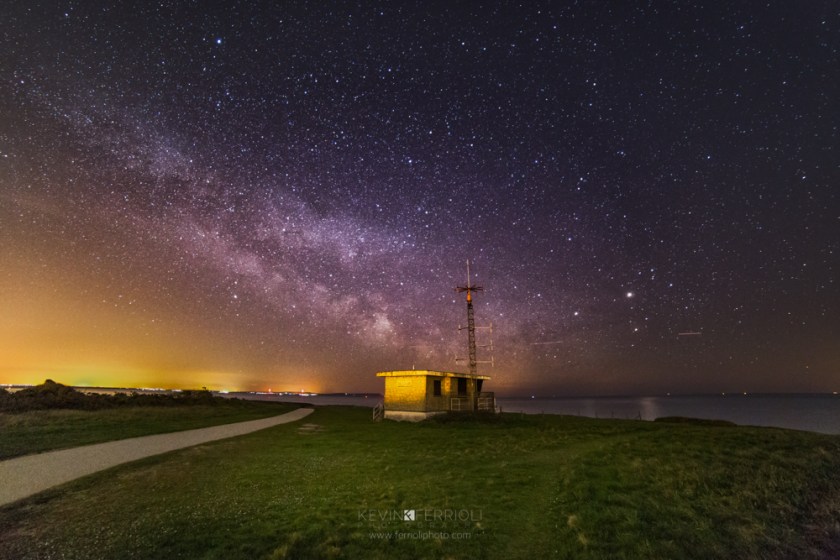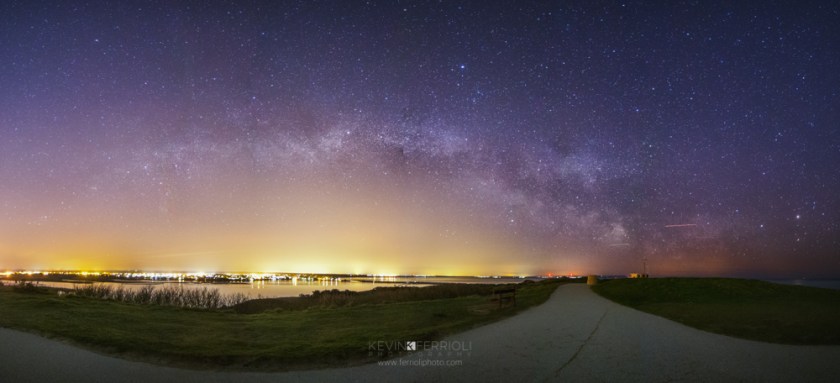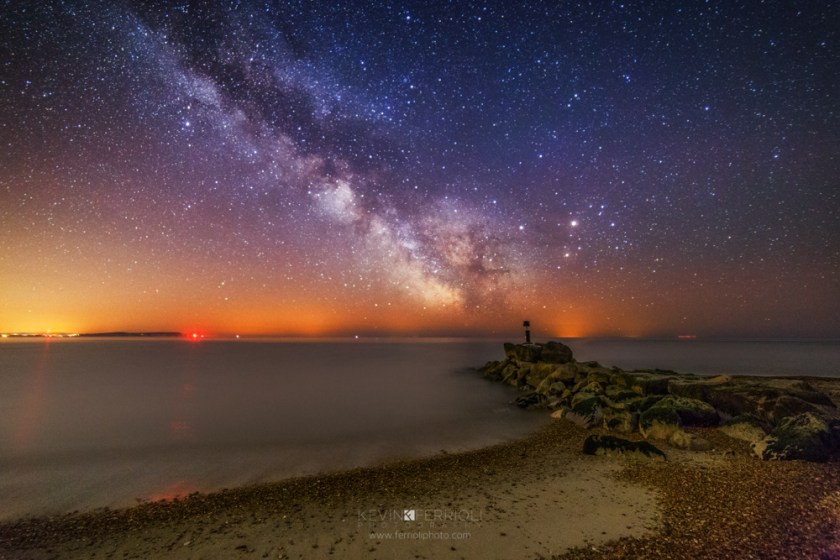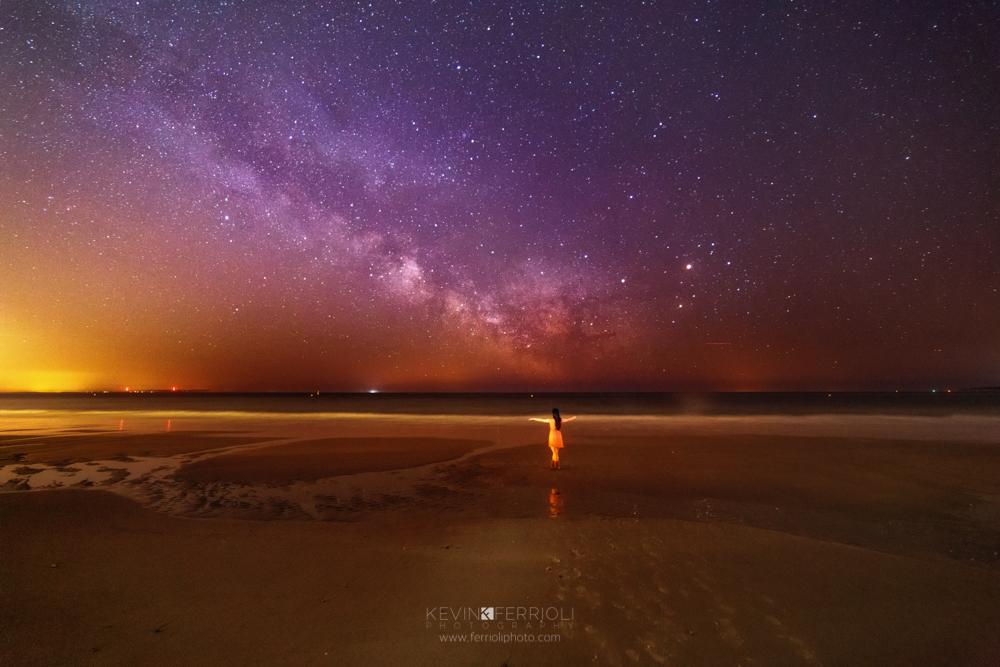
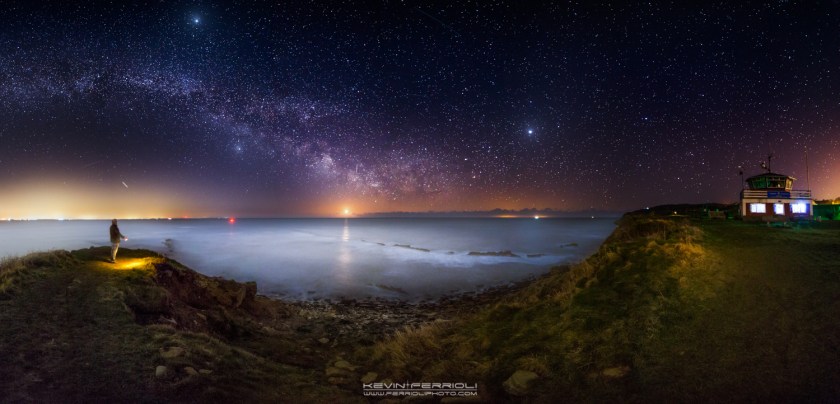
Peveril Point Swanage Milky Way Welcome 2018

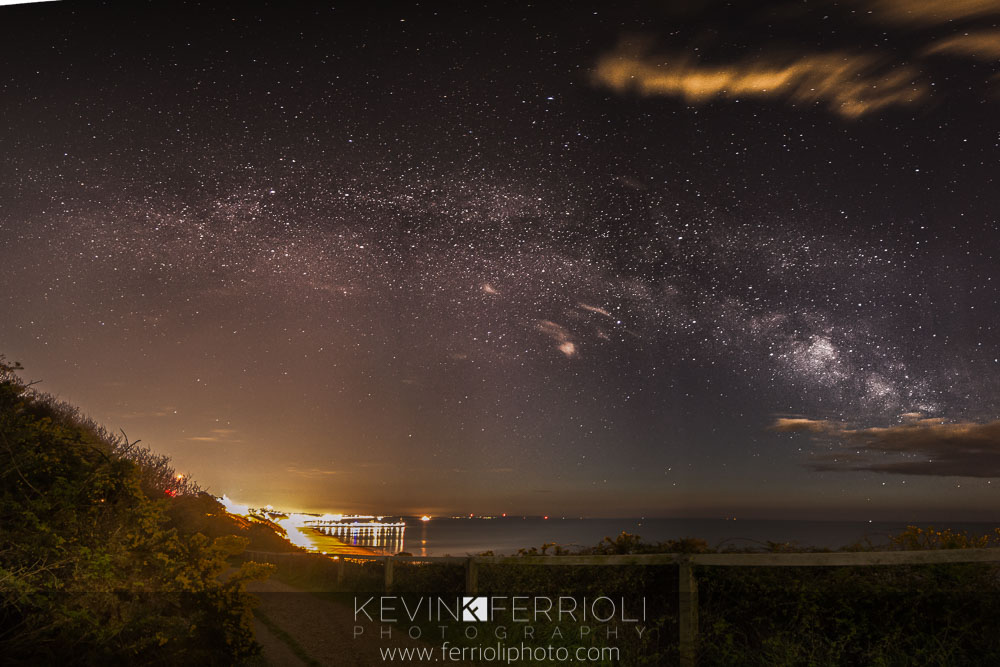
Swanage Peveril Point Milky Way in Dorset UK

Swanage Milky Way
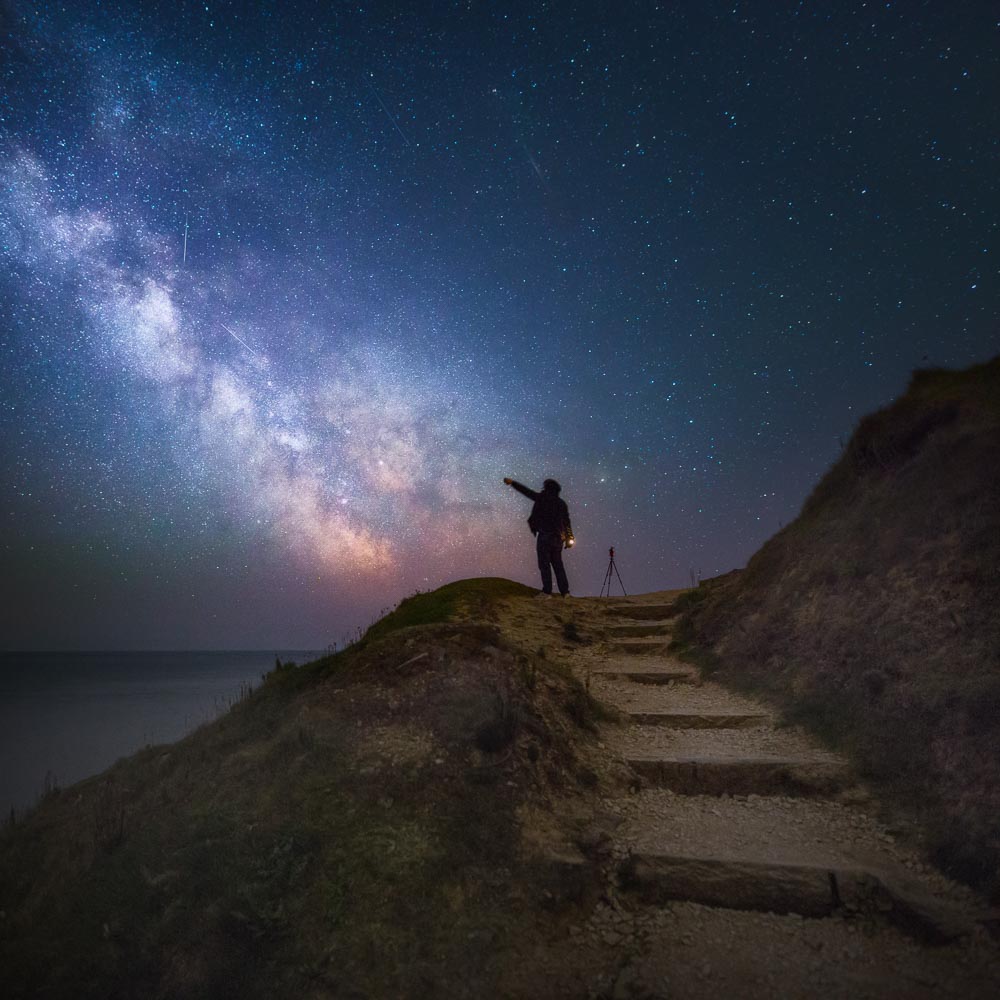
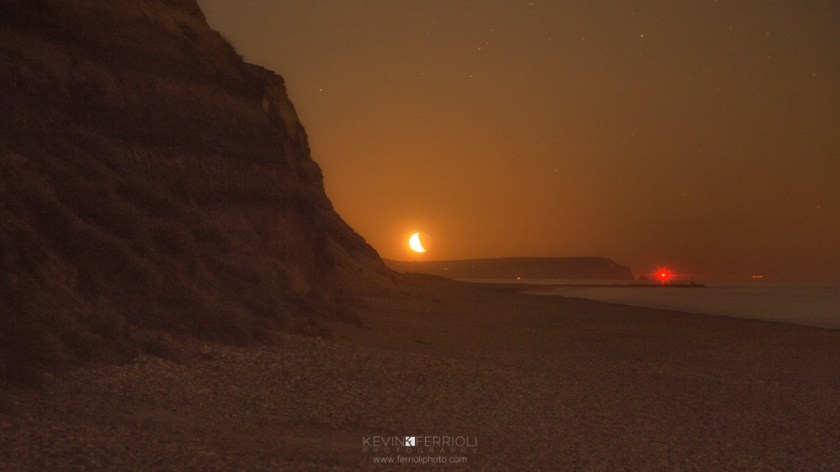
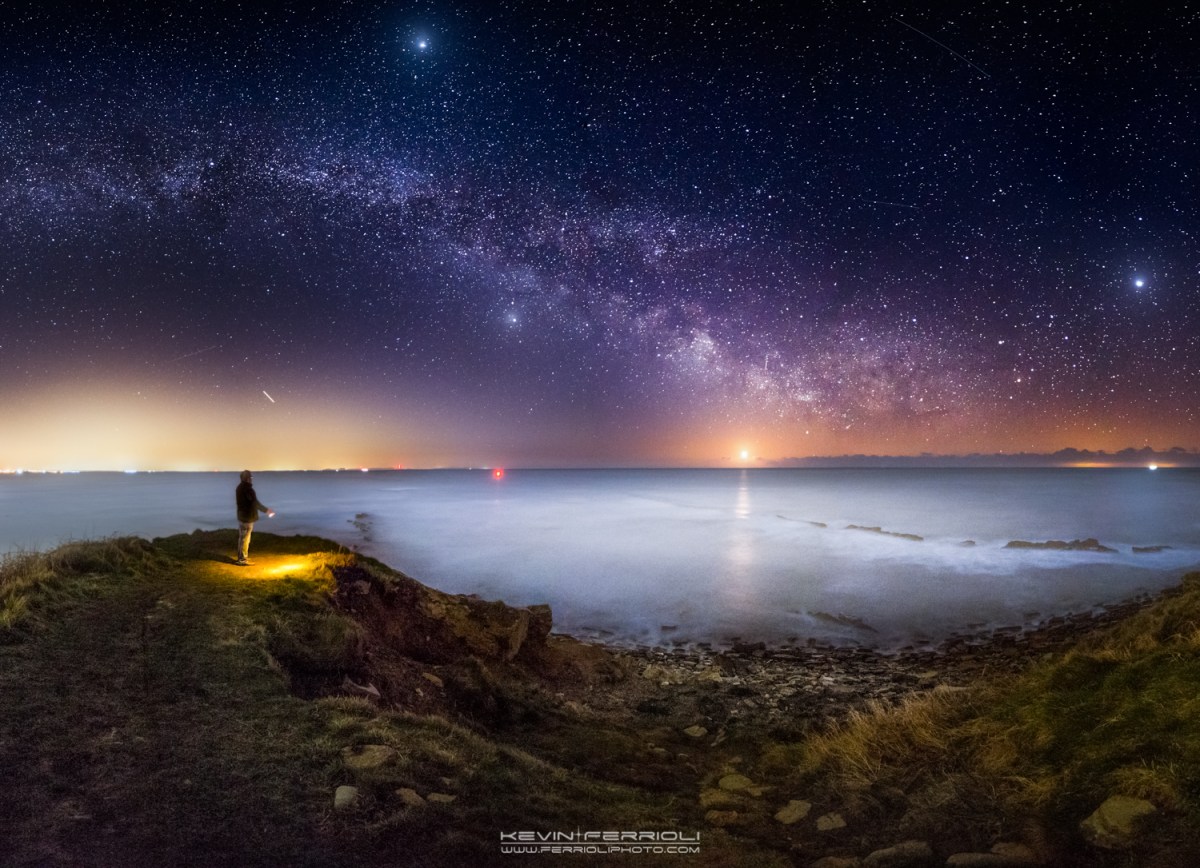
Milky Way and moon rise from Peveril Point in Swanage, Dorset, United Kingdom

As I did last year, I went again to the same place for my first Milky Way, Peveril Point, Swanage, Dorset UK. For my previous attempt, I used a Sigma Art lens 20mm F1.4. The idea was to capture more detailed foregrounds. The lens proved to be excellent for low light but it has four major downsides: first, photos of the night sky taken with this lens were extremely difficult to edit. Second, it is not very good for panoramas, despite I used a nodal head. Third, the autofocus is the worst of any lens that I have ever owned, it is very difficult to capture a sharp photo even with the best light conditions. And fourth, the lens profile in Lightroom is terrible, it makes the images worse. I was not bothered by the astigmatism distortion of the corners which virtually disappeared in panoramas. Overall, I was not happy with the lens, I felt I wasted my last year trying to use it. So I went back to my trustworthy Samyang lens 14mm F2,8. Coupled with the Canon 6D, still my preferred choice. I have not tested the Sigma 14mm F2 yet, but given the price, I will stick with my Samyang.

Below is the process used to create it. It is a panorama of 7 photos, Canon 6d and Samyang 14mm F2.8, ISO between 4000 and 5000. Each photo is 25 secs. Stitched in Adobe Lightroom.

Peveril Point Swanage Milky Way: 7 images highlighted below and stitched in Abobe Lightroom.

I also took another one without me, and here is the result:
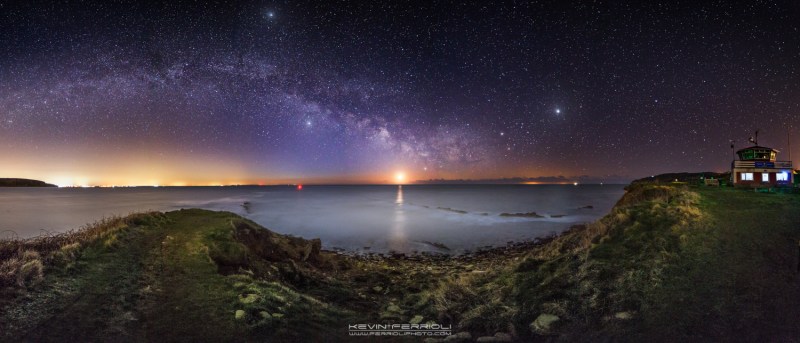
Swanage Peveril Point Milky Way. Dorset United Kingdom. Canon 6d Mk1 Samyang 14mm F2.8. Panorama of 8 photos. 25 Secs each ISO 4000.

The moon rise was spectacular, one of the most beautiful rises from the sea, it was also so dim that allowed to capture the Milky Way up to the last minute before the astronomical dawn. Again, I thank you the nature for this beautiful experience.
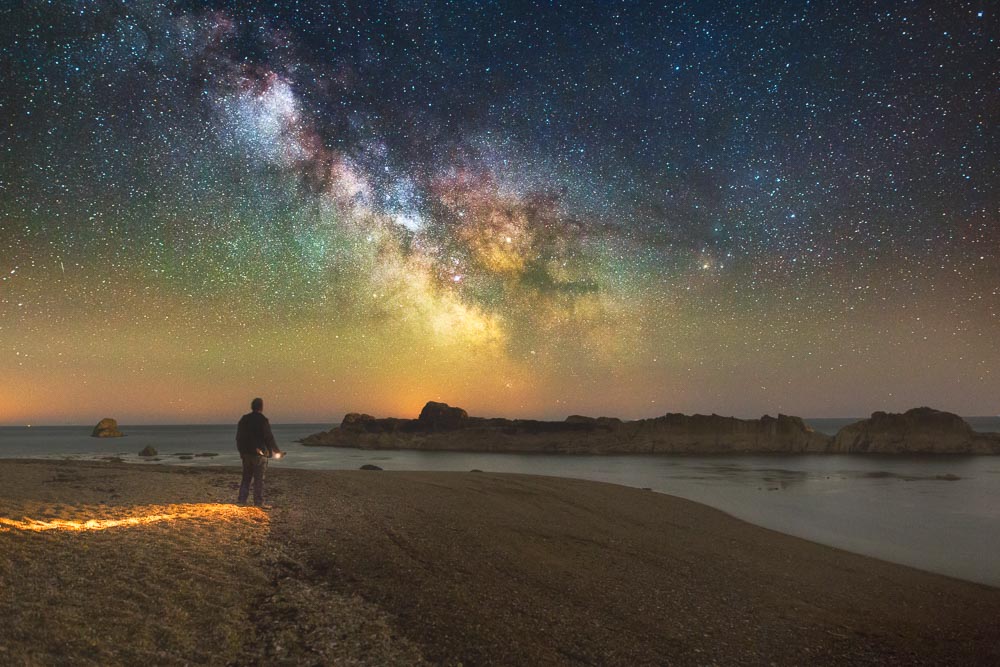
And 2017 so far

This year 2017, started with big expectations, always trying to be realistic too about what it could be achieved, as the windows of opportunities in the UK are extremely reduced…so every clear night is so precious, to the point that if I miss one window(a clear moonless night ), I feel like I just wasted my time by doing something else.  It is a journey, and a great learning experience and it has become a religion.


Heavenly Ways

Heavens are my inspiration and always finding the ways to get to them…

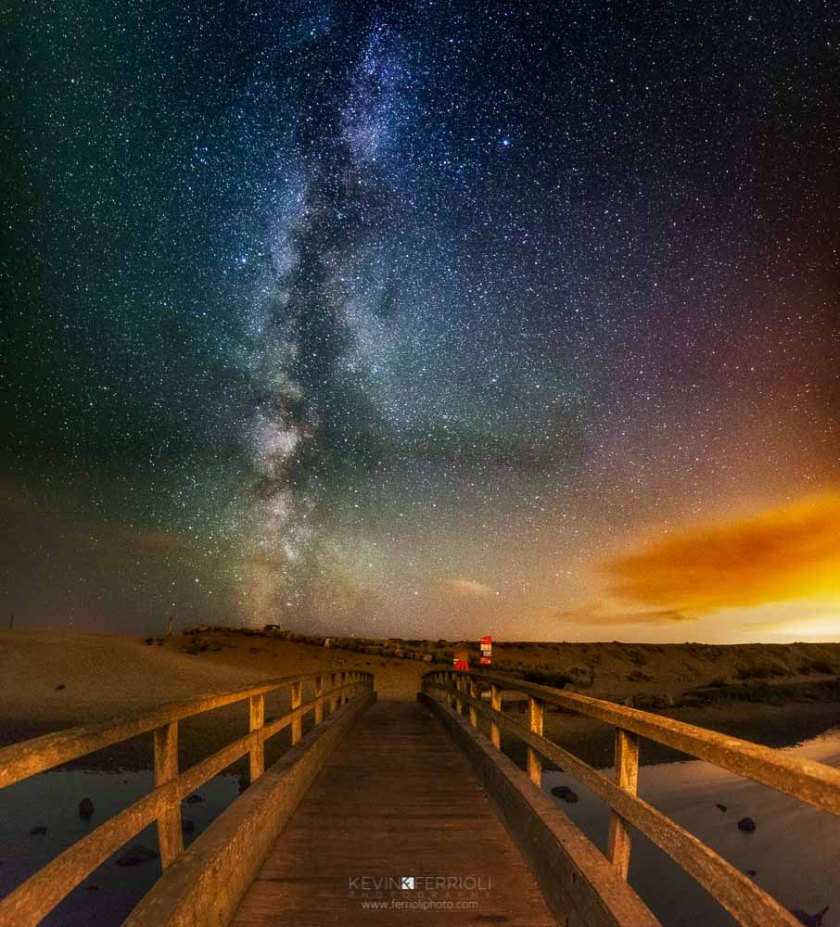
Last Thursday 27th April 2017 from Durslton Country Park in Dorset UK.

_MG_2275-Pano-Edit-2.jpg
Trying to reach you Milky Way Durlston Country Park Dorset UK

Astrophotography Workshop Dorset 2016

Welcome to 2016 Astrophotography Workshop in Dorset.

Weather dependant, the first window is on Friday 26th August 2016 from 10:30 pm. Two hours session.

Location:  Isle of Purbeck or Studland (TBC on the day).  You must have your own transport.  Precise location will be released on the day.

To book your place only complete the form with subject : Astrophotography WS.

Looking forward to see you there !


©Kevin_Ferrioli00001160801


Update:

New window Monday 29th August 2016

IMG_1729-Pano-Edit


Poole Harbour Starry Nights 

Poole Harbour Milky Way Dorset

The largest natural harbour in the United Kingdom.  It is the estuary of 4 rivers, the largest being the Frome.  It has an approximate area of 36km2 (14 sq mi) and it is very shallow (average depth is 48cm) .  The area has a long history of human settlement pre-Roman times.  The harbour was used by the Romans as an invasion port.

©Kevin_Ferrioli00004151014
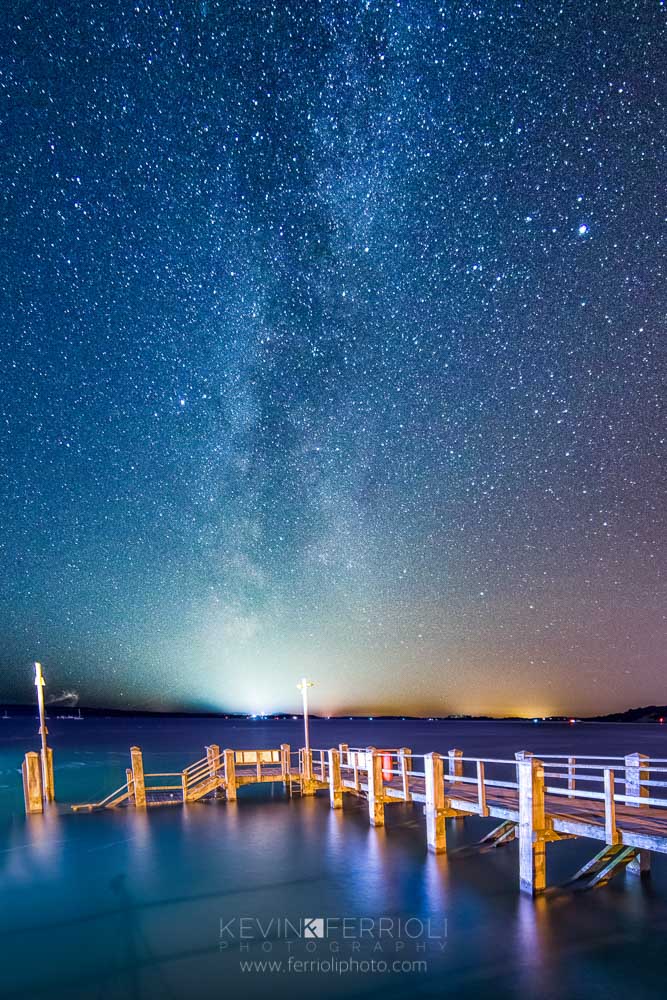
View of the Sandbanks chain ferry jetty. Sirius and the Milky Way, Sandbanks, Poole, England
©Kevin_Ferrioli00001150905
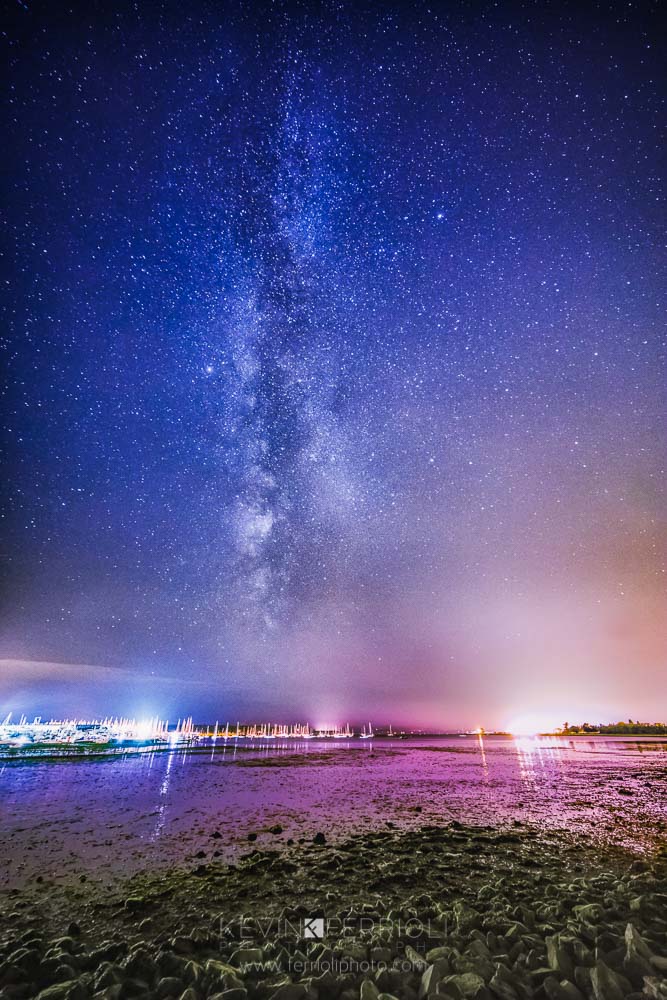
Milky Way above Parkstone Yacht Club and Poole Quay, from Whitecliff Harbourside Park, Poole, England

Poole is the main town.  It became a wealthy city in the 17th century as it was a trading hub, and by the 18th century it was the main British port trading with North America.

©Kevin_Ferrioli00001150821
Milky Way view above Poole Park, Dorset, England


©Kevin_Ferrioli00005151113
Hamworthy Lake Pier,  Sirius and the Milky Way, Poole, England.

The harbour is an area of international importance for wildlife conservation, and borders three natural reserves.


©Kevin_Ferrioli00001150809
View of the Milky Way above the harbour from Evening Hill, Poole, England

Poole Harbour has a special charm, and is well known for the most beautiful sunsets in Dorset.  This post is about a face little known, Poole Harbour under the starry nights

©Kevin_Ferrioli00003150809
Milky Way above Sandbanks bay, next to the sailing club. Poole, England.

Hengistbury Head…Natural Reserve

Hengistbury Head, an outstanding beauty day and night

Hengistbury Head is a headland jutting into the English Channel between Bournemouth and Mudeford in the English county of Dorset. It is a site of international importance in terms of its archaeology and is scheduled as an Ancient Monument.Declared a Local Nature Reserve in 1990, the head and its surroundings form part of the Christchurch Harbour Site of Special Scientific Interest.It is also a Special Area of Conservation, Special Protection Area, an Environmentally Sensitive Area and a Site of Nature Conservation Interest.

IMG_1981
The head supports about 500 plant species which is a quarter of the national flora.
IMG_2003-Edit
H.M. Coastguard Relay Station on the top of Warren Hill

The name “Hengistbury Head” refers to the immediate area; the elevated portion is called Warren Hill.

IMG_1988-Pano-Edit
View of Christchurch Harbour from Warren Hill

The area enjoy some beautiful dark spots where the Milky Way can be photographed with amazing detail

IMG_2087-Edit
Groin constructed to reduce erosion of the head, lights of the Isle of Wight

Enjoy the moon rising, giving the impression of a landscape from mars.

©Kevin_Ferrioli00001160501
Moonrise from Hengistbury Head, Dorset, England

Branksome Beach Love

Astrophotography in Poole, Bournemouth, Dorset, England. Canon 6D. Love inspiration. Milky Way

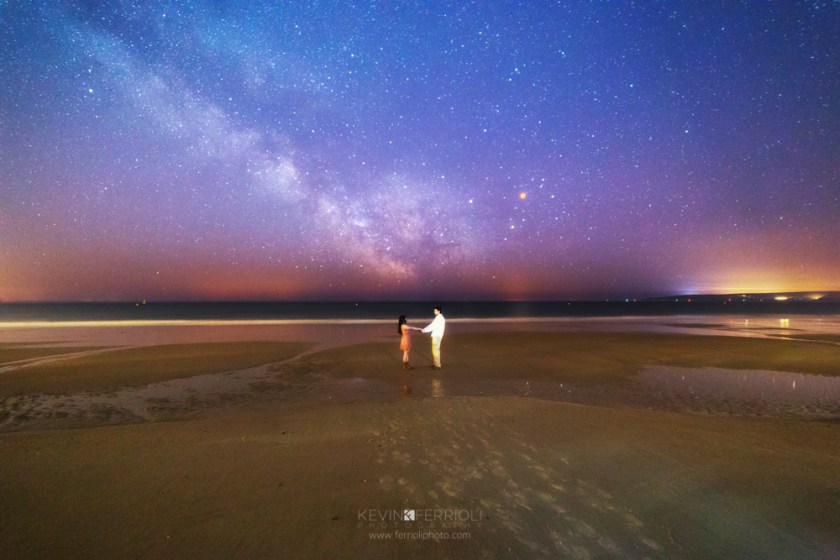
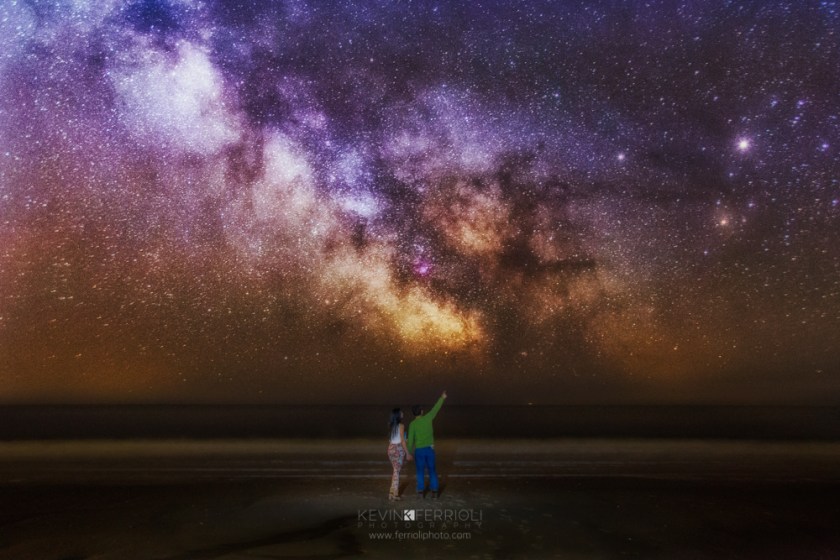
Branksome beach in Poole, Dorset-UK, is not a place where you would think to photograph the night sky…surrounded by light pollution from Bournemouth and Poole, using the right exposure the Milky Way can be captured.  This time I did it with the help of two couples and showed them the beauty of the night sky…

IMG_2326-Edit-2I was lucky to have a clear sky with a low tide at the same time…it was also a good opportunity to experiment some techniques using a flash and snoot to lighten up the subjects…
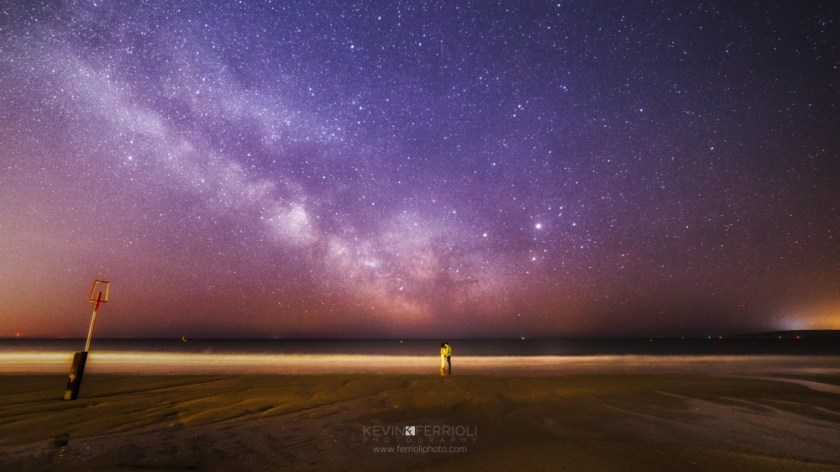
IMG_2211-EditAnd also to combine some techniques derived from the photography of deep sky objects (like galaxies, nebulas, etc)…For the image below,  I have taken one photo with the couple and then 24 more without moving the camera or changing the settings….It was about 6 minutes of info in total…Using Deep Sky Stacker (DSS) I have stacked the 24 images and then combined in photoshop with the very first image of the couple…the result is a detailed view of the galactic centre…
IMG_2235-Edit-2
Galactic Centre from Branksome Beach, Poole Dorset, England. Canon 6D, 25Exposures 15sec iso8000 F4, 24 of them stacked with DSS.


Bournemouth Hidden Beauty: Night Sky

Bournemouth, a city blessed with miles of sandy beaches and inspiring scenery….but there is a face that not many people know…the night sky…

©Kevin_Ferrioli_N00001150711
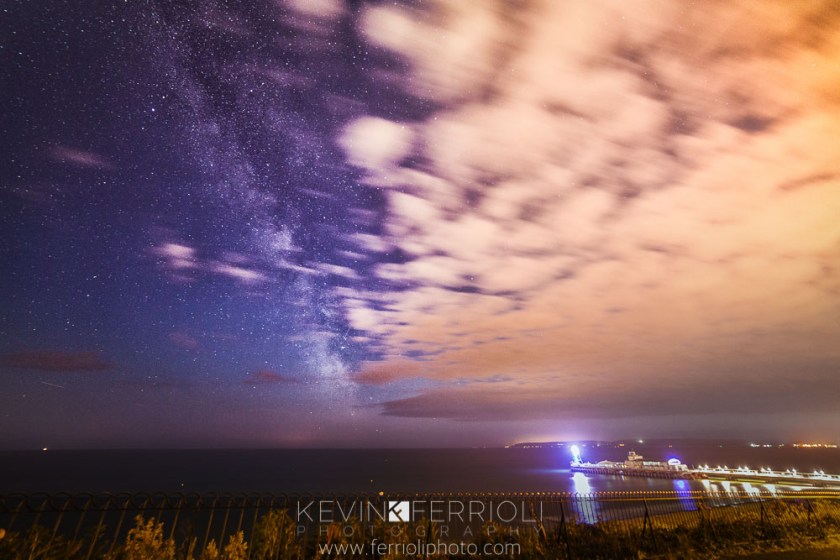
One of my first attempts in 2015, the Milky Way above the Bournemouth Pier. Canon 6D Samyang 14mm 2.8. July 2015

Bournemouth has been my personal testing ground for night photography under extreme light pollution….it was only a dream to see the Milky Way under such conditions…but after several attempts I learned a thing or two, extracting the maximum of the camera sensor (Canon 6D) and also from the lenses.

©Kevin_Ferrioli00001150721
Milky Way next to Bournemouth Pier, July 2015.


It took me several attempts due to my learning curve but also due to the lack of windows of opportunity, most of the times when I went to give it a go, a huge cloud gave me little or no chance…but keep trying and you eventually get something…  The light pollution coming from the beach is amber type, which is very difficult to deal with so first thing to do is to try it  where the lights are not present or when they are switched off, which in Bournemouth Pier is after 1am.

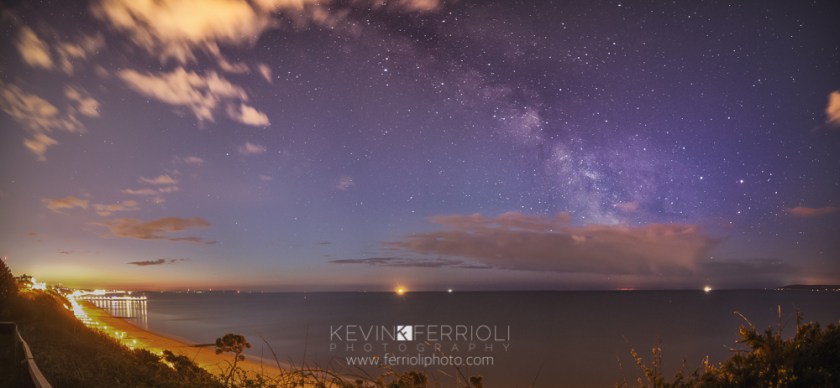
After these shots I though there was more room for improvement and I kept trying different locations. Taking photos of the Milky Way in Bournemouth is most of the time a failure than a success… I have even tried to repeat some of these shots and it has been proven very difficult.  But there was one option I didn’t try last year:  A panoramic shot. And the morning of the 17th April 2016 was the window…it was not very long due to the moon set at 4:20 am aprox and again not being helped by the approaching clouds, but it was enough for only three attempts and here are the results:

The above attempt was in the dark hour (no moon and no twilight of the dawn, it lasted less than 30 min). Few minutes later(image below), the very first light of dawn started to appear on the left…it was a truly breathtaking view….

©Kevin_Ferrioli00001160417

The first pano is made of 12 vertical images…the second from 5 horizontal images…

I believe that it could be done even better, these images are just a proof of concept..,during summer time there will be another try…Bournemouth deserve it!!!